










IMPROVE AI-Powered medical diagnostics

Synthetic Data Makes Medical Vision AI Possible

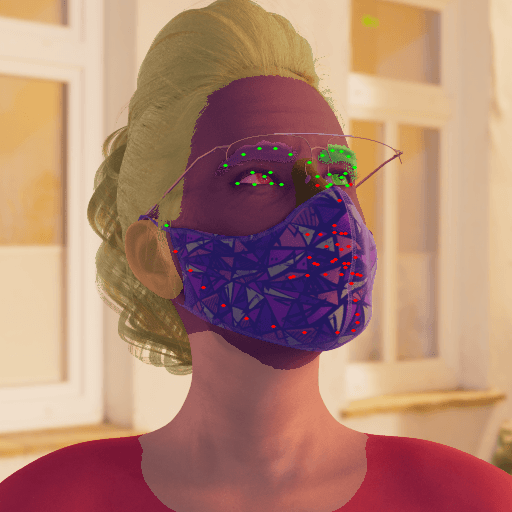
Switch to the Synthetic Data Platform and gain full control over scene parameters when generating synthetic datasets for medical vision AI.

Scroll down to discover how

Contact us

Empower Clinicians with
AI-Powered Diagnostic Precision

Enhancing Airway Analysis

Synthetic data augments bronchoscopy training by providing diverse, realistic airway scenarios, improving diagnostic accuracy and procedural proficiency. For instance, generating synthetic images of bronchial structures with varying pathologies allows AI models to better detect and classify airway abnormalities.

Refining Tissue Analysis

In histopathology, synthetic data can provide diverse tissue samples, enhancing AI algorithms' ability to identify and classify various disease states. An example is generating synthetic histological images of breast tissue with different cancer subtypes, improving AI accuracy in cancer detection.

Improving Detection of Rare Lung Conditions

Synthetic data can simulate rare lung disease patterns, such as honeycombing and emphysema, enhancing vision AI's capability to identify atypical features in CT scans.

Enhancing AI Training with Uncommon Anatomical Variations

With synthetic data, it is possible to enrich training and validation data with uncommon anatomical variations, enabling medical vision AI systems to better recognize and manage atypical cases.

Refining SPECT Imaging

By simulating diverse radiotracer distributions, synthetic data enhances AI’s ability to interpret SPECT scans accurately. For example, generating synthetic SPECT images with varying degrees of myocardial perfusion defects may aid in training AI models to better detect coronary artery disease.

Enhancing Functional Imaging

Synthetic data may improve PET scan analysis by generating realistic metabolic activity patterns, aiding AI models in detecting abnormalities. For instance, creating synthetic PET images of varying glucose uptake levels in the brain helps train AI to identify early signs of neurodegenerative diseases like Alzheimer’s.

Advancing MRI Interpretations

By generating varied anatomical and pathological scenarios, synthetic data may enhance MR image analysis, aiding in the development of robust AI models for accurate diagnostics. An example includes creating synthetic MR images depicting different stages of brain tumors, which helps in training AI systems to identify and differentiate tumor grades.

Selected Platform Features

Multimodality
simulations

Our Platform meets medical needs, by enabling data generation and sensor simulation in key modalities such as MRI, X-ray, CT, PET, SPECT, and visible light.

3D ground truth
by default

In-built pixel-perfect labels in the generated data eliminate labeling bias and inconsistencies resulting in better training outcomes and more robust models.

Full control over
data simulation process

Using our proprietary library you can enjoy full control over randomization and determinism during dataset parameters setup.

More features

Leverage the wealth of ground truths for synergistic training outcomes

Data generated on the SKY ENGINE AI Platform provides information-rich ground truths that facilitate vision AI model development. They include:

  • keypoints
  • semantic masks
  • depth maps
  • bounding boxes
  • normal maps
  • Customizable annotations, such as COCO json

One tool to address your vision AI needs

With our Synthetic Data Cloud dataset generation becomes an iterative process. The more you learn about your model, the better you can adjust dataset parameters to obtain robust training outcomes.

Features such as parameter-based scene randomization and automatic dataset balancing allow easy and effective adjustments to the training dataset.

Trusted by

Piotr Szular

Account Strategist at Microsoft

SKY ENGINE AI proved synthetic data is essential for developing AI solutions in medical imaging. Their Synthetic Data Cloud is improving AI algorithms, enabling a pathway to reliable medical diagnostic solutions based on vision AI. I highly recommend the SKY ENGINE AI platform to anyone building vision AI expecting top accuracy and reliability.

Some answers to your most-asked questions

What types of sensors can you simulate?

A wide range of sensors can be simulated, from visible light cameras to radars to specialized magnetic resonance (MRI) detectors, and the basic sensor setup can be enhanced with specialty features, such as distortions for camera lenses. Additionally, it is possible to simulate many utility issues, e.g. dirty cameras and sensors.

Is the Synthetic Data Cloud a SaaS platform?

Yes, SKY ENGINE AI Platform, or the Synthetic Data Cloud, is a software-as-a-service solution. You need to set up an account with us and you will be able to use the Platform from there.

Are your renders physically based?

Yes, all our renders are based on physical models of light interactions with surfaces and sensors, such as microfacet models for refraction through rough surfaces [1] or Fresnel term approximations for metals [2].

How are your images annotated?

Our images are annotated automatically. Having complete control over the scene means you possess all the information regarding the 3D dependencies present. By eliminating manual labeling, you remove biases and inconsistencies associated with labeling.

What is the dataset size limit?

Our Platform is a tool for generating data. Therefore, datasets can be as big or as small as you need them to be. It depends on your vision AI model training needs, project time frame, and available resources. Just remember, 6 million renders is nothing new for us.